2. Pioneer for green energy

Becoming involved in environmental preservation

After resigning from the Royal School of Mines, Dr. Leggett went on to work for Greenpeace International, an international environmental NGO. Since he had been teaching at a conservative university, it was a major change for him.

In his first year at Greenpeace, he was involved in addressing a broad range of issues, including wild animal preservation, harmful substances, nuclear power, and climate change. Then, along with his wish to focus on climate change, he took on the position of chief scientist for the Greenpeace climate campaign. As chief scientist, he interacted with campaign’s offices in different countries.
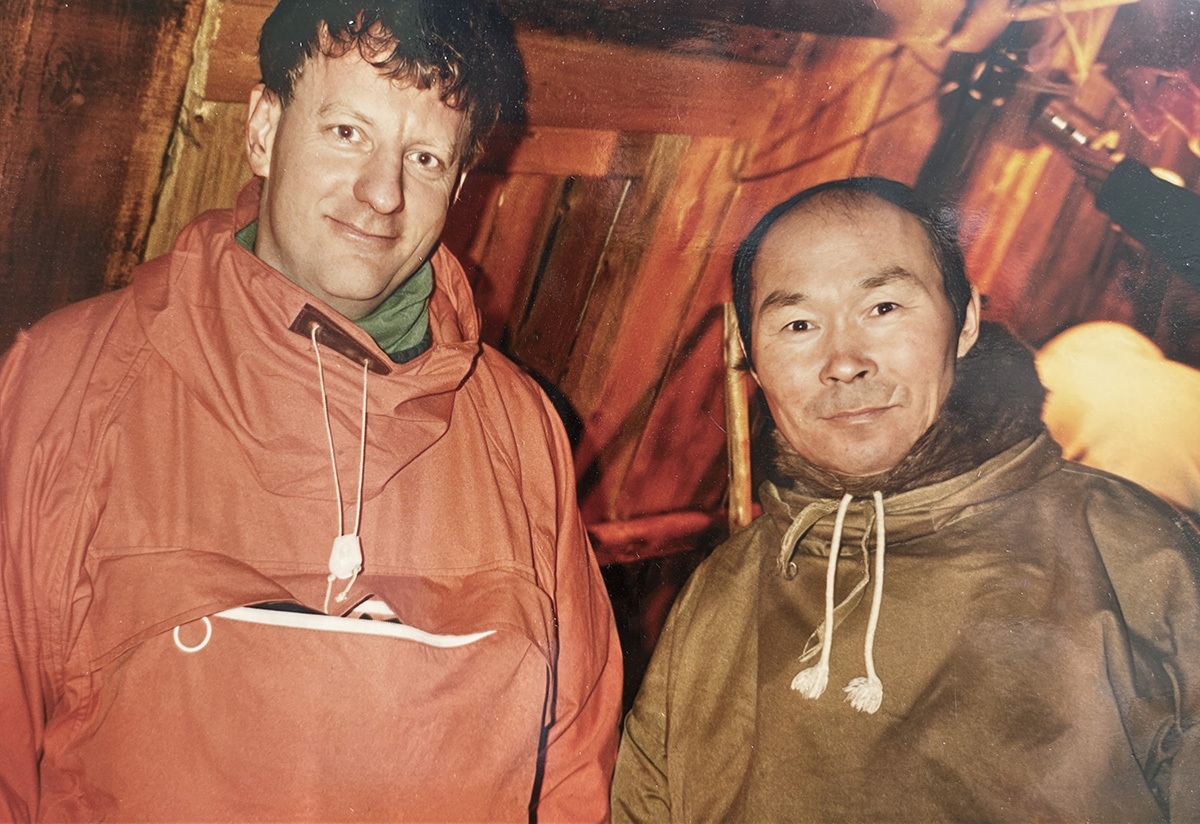
With the leader of Inuit at an oil field in Siberia


With the leader of Inuit at an oil field in Siberia

Working with experienced leaders and managers during this period helped Dr. Leggett to develop the skills to become an entrepreneur. Looking back on the experience, Dr. Leggett felt that he was very lucky. Many people engaged in business around him recommended that in order to advance climate change countermeasures, it would be better not to focus solely on ideas, but to take concrete steps by founding a company that could promote action through business.

Dr. Leggett decided to take a year off from Greenpeace and return to Oxford University to study the relationship between climate change and the insurance industry. The relationship was clear. If natural disasters were to increase due to climate change, the amount of money paid out by insurance companies would increase, causing a significant burden on the insurance industry. Dr. Leggett published his findings in the hope that the insurance industry would seriously consider the risk of climate change and take action to mitigate it. The reason that Dr. Leggett focused on the insurance industry was because gas and oil companies at the time were intent upon protecting their vested interests, which meant that they resisted implementing climate change countermeasures. Dr. Leggett believed that convincing the insurance industry to press for action to protect its business would prompt action and promote change in the gas and oil industry.

Attempts to make solar power an attractive investment

Using the experience that he gained with Greenpeace and conducting research at Oxford University, Dr. Leggett founded Solarcentury, a solar power company, in 1997. First, it was founded as an organization to introduce the concept of solar power to investors who were anxious about climate change. However, the company started the sale and installation of solar power generation systems.

ソCo-workers at Solarcentury

Co-workers at Solarcentury

Co-workers at Solarcentury

It took about six years for the company to become profitable. During those six years, Dr. Leggett encountered many difficulties. The greatest of these was resistance from major coal and oil companies. Their attitude was that they would consider promoting solar power if and when it became a more affordable energy source capable of competing with coal and oil. Even after the use of solar power spread and became cheaper to produce, however, they refused to change their position to resist.

Another big difficulty was financing. Because the solar power business was very new at the time, it was difficult to attract investors or convince banks to provide loans.

It was because of exceptionally talented and dedicated staff that he was able to overcome such difficulties. During the global financial crisis that occurred between 2007 and 2008, many companies went bankrupt, but Solarcentury had sufficient funds to survive the crisis. This helped Solarcentury grow to become the UK’s largest solar energy company.

Team meeting at Solarcentury


Team meeting at Solarcentury

Green energy will change the future

Dr. Leggett continues to believe that solar power and other green energy are the key to addressing climate change. One particular advantage of solar power is its convenience and the fact that it does not require any fuel to produce. Dr. Leggett has long believed that solar power would become important as the world’s future energy, and this has become a reality as the technology has continued to spread. Experts who once said that solar power would not be able to compete with nuclear power, coal, diesel, or gas have come to recognize and admire the value of solar power.

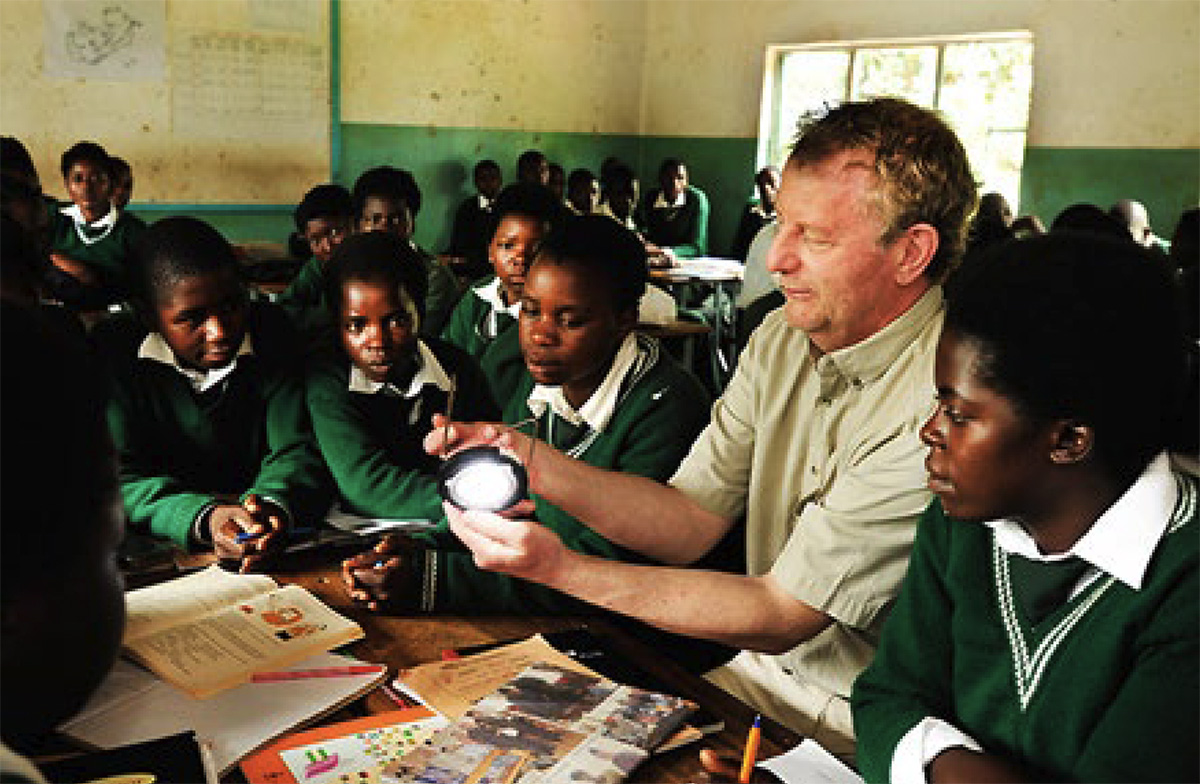
A notable Solarcentury achievement is a program that spreads the use of solar lanterns in Africa. This was undertaken by SolarAid, a charitable organization developed by Solarcentury. Solarcentury donated 5% of its profits to SolarAid to support solar lantern sales by local people. As a result, it promoted sustainable local business and income structures.

This program was not only helpful for society, but it also increased the motivation of the employees and brought significant achievements for the company. Activities started in Kenya and Tanzania, and then expanded to Malawi and Zambia.

Many people in Africa had no light at all after sundown because they could not afford kerosene. Dr. Leggett is deeply pleased to have helped bring light to homes using solar lanterns.

Explaining solar lanterns at a school in Malawi

Explaining solar lanterns at a school in Malawi

3. Does having fossil fuels cause loss?

menu

Dr. Jeremy Leggett

English